Dr. Lisa Wisniewski’s Book Shares Oral Histories from Communities in Connecticut and Massachusetts So Migrants’ Culture and Heritage Will Not Be “Forgotten”
By John McNamara
The migration of Eastern Europeans to New Britain and other U.S. destinations after World War II is a story Professor Lisa Wisniewski, PhD, has wanted to tell from the beginning of her academic career.
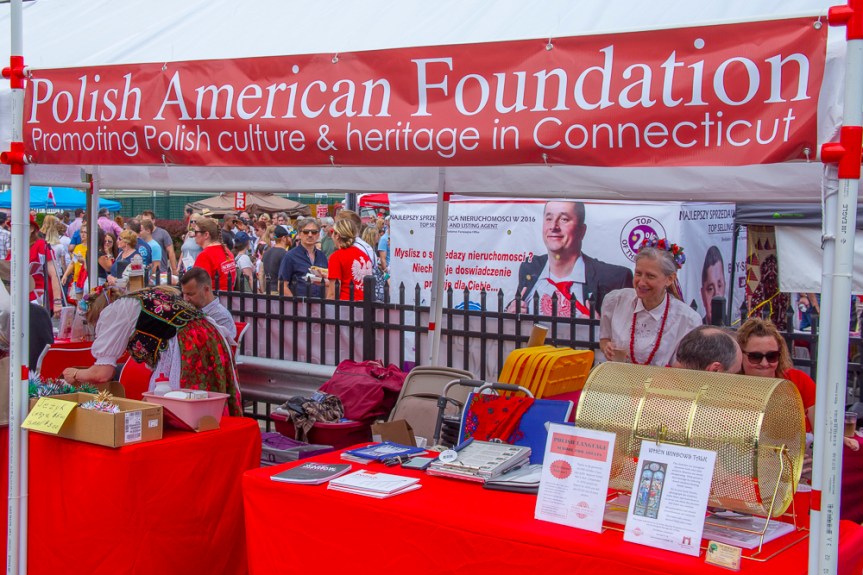
Growing up in and around New Britain, Wisniewski was connected early on with her Eastern European roots as a second generation Polish American. From an early age she immersed herself, learning Polish in the home and attending Polish Language School (Szkoła Języka Polskiego), a program begun at Holy Cross School in 1960 that still holds classes at New Britain High School’s Freshman Academy.
NB POLITICUS: Books of Local Interest
Dr. Wisniewski, a sociology professor and Faculty Senate President at Goodwin University, is the author of Navigating Education As A Forgotten Immigrant: Perspectives from the Eastern European Community, described by the publisher as the stories of members “of the Eastern European community living in the United States…..Their stories highlight their commitment to life in America, the challenges they face, their evolution of identity, and what it means to live in two worlds simultaneously.”
“Navigating Education As A Forgotten Immigrant” (ISBN 078-1-66696-674-9), published last January in hardcover by Lexington Books, focuses on two generations in the Eastern European diaspora connected to “two worlds simultaneously.”
New Britain has been a prominent destination for Poles, Ukrainians and others migrating to the U.S. before and after World War II. They filled plentiful post-war factory jobs in the 1950s. They joined churches, fraternal societies and schools already established by earlier migrants that preserve the language and customs of the old countries. The rates of migration may have slowed in recent decades but these close-knit communities, dating back more than 100 years, give new arrivals a foothold to take jobs, create businesses and contribute in important ways to civic and cultural life. “I’ll say New Britain has been sort of the model of these communities and is referenced many times within the book,” Wisniewski says.
The book, according to the author, is an “ethnographic oral history” of 10 individuals who share their experiences and personal reflections about hardship, transition and assimilation.
Their families all settled in communities in Massachusetts and Connecticut where Wisniewski began her intergenerational research.

The author’s research began in graduate school at Central Connecticut State University’s (CCSU) Stanislaus A, Blewjas Chair and Polish Studies program more than 10 years ago. Her inquiries started in the Polish American community but soon broadened to include immigrants from Ukraine and other countries. While Wisniewski found accounts of migrants from one generation and one country, she says covering both first- and second generations is a new perspective and that broadening the book to other countries “demonstrated the interconnected nature of the Eastern European region.”

Five chapters are devoted to first generation emigres coming to America as children or young adults. Wisniewski describes the group as part of the Gen X, Millennial and Gen Z generations (groups that go from teen years to age 60). They are from Poland, Romania, Ukraine and Russia and are “the grandchildren of World War II survivors and are aware of how recent history is connected to the region’s past.” That past includes living behind the Iron Curtain as the Cold War grew between the U.S. and the former Soviet Union. According to Wisniewski, first generation emigres more often than not “don’t tell their stories.” They find it difficult because of the anguish and hardships of living under or remembering authoritarian governments. After the fall of the Soviet Union economic conditions continued the migration of Eastern Europeans.
Wisniewski adheres to research protocols, using first name pseudonyms to keep identities confidential. The anonymity may have helped interviewees to open up about their journeys. The traumas of life in totalitarian states that come up repeatedly in the oral histories are rarely shared with family and friends. First generation immigrants, explains Wisniewski, “came here to work and survive” without wanting to dwell on conditions that drove their parents to America.
Wisniewski records the stories of five second-generation Americans. They were born here not knowing what life was like in the lands of their parents. Like Wisniewski, however, they knew something of their roots from spoken languages and involvement in the Eastern European-oriented organizations that serve New Britain and other communities. It is clear from Wisniewski’s accounts that this group, like members of every ethnic group, yearn to know more about their identities and hold on to their heritage.
Sharing the stories in a textbook is a way to ensure that the traditions passed from one generation to the next are not forgotten. Dr. Wisnieski is concerned that those histories and identities may be “forgotten” for the next generation. She also believes that in the telling of the traumas experienced behind the Iron Curtain there can be healing for those who otherwise are reluctant to share experiences that for some threatened their lives and the well-being of their families.
“I struggled over the title for a long time,” says Wisniewski, but the word “forgotten’ is intentional. The virtues and traditions in the Eastern European community can easily be forgotten by the next generation “in the context of the melting pot” without knowing the history.
The Ukraine-Russia conflict now headed into its fourth year was fresh in the minds of three Ukrainian Americans profiled by Wisniewski (identified as Pavlo, Julie and Laura in the book). Recent events are a reminder of how important a city like New Britain is to the current generation of Polish- and Ukrainian Americans.

The Russian invasion has spawned a wave of Ukrainians, especially women and children, coming into New Britain and other places with established support systems. The Ukrainian-American community continues to provide safe harbor to new arrivals and has mobilized humanitarian aid back to Ukraine. For the second generation far removed from war zones, the situation has created a resurgence of national and ethnic pride, according to Wisniewski.
“If you look at the current situation we’re repeating history right now,” says Wisniewski. “It’s all from 100 years ago. The sad thing is it isn’t new but people forget history.”
Publishing a college textbook about the Eastern European diaspora fulfills an important academic goal for Wisniewski but her ethnographic research will not stop there. She wants to make the stories in “Navigating Education as a Forgotten Immigrant” accessible to wider audiences as well as to add more stories from first- and second-generation individuals with similar backgrounds sharing their experiences and rediscovering their roots.
Toward that end Wisniewski has given talks on her book at Goodwin University and CCSU since its publication. She is collaborating with the New Britain Public Library (the book is available for loan there) Her outreach has included a presentation to a multilingual class at New Britain High School in November. Wisniewski has started a Substack newsletter and podcast to expand on the first-person stories that are in her book
“I’m optimistic that this book is an opportunity to make these communities visible on a higher scale of American life, to heal a traumatic past, and also to share more stories of what this was like.”
Based on that optimism Wisniewski cites ways to preserve the culture and heritage of Eastern Europeans for the second generation and those who will follow them. In addition to sharing immigration stories, she says activities may include maintaining language classes, creating opportunities to visit the home countries and developing more cultural exchanges between and among Eastern Europeans in the U.S. and the European countries of their families.
John McNamara is a Ward 4 Alderman and Majority Leader of the New Britain Common Council.
 NB Politicus