
by John McNamara
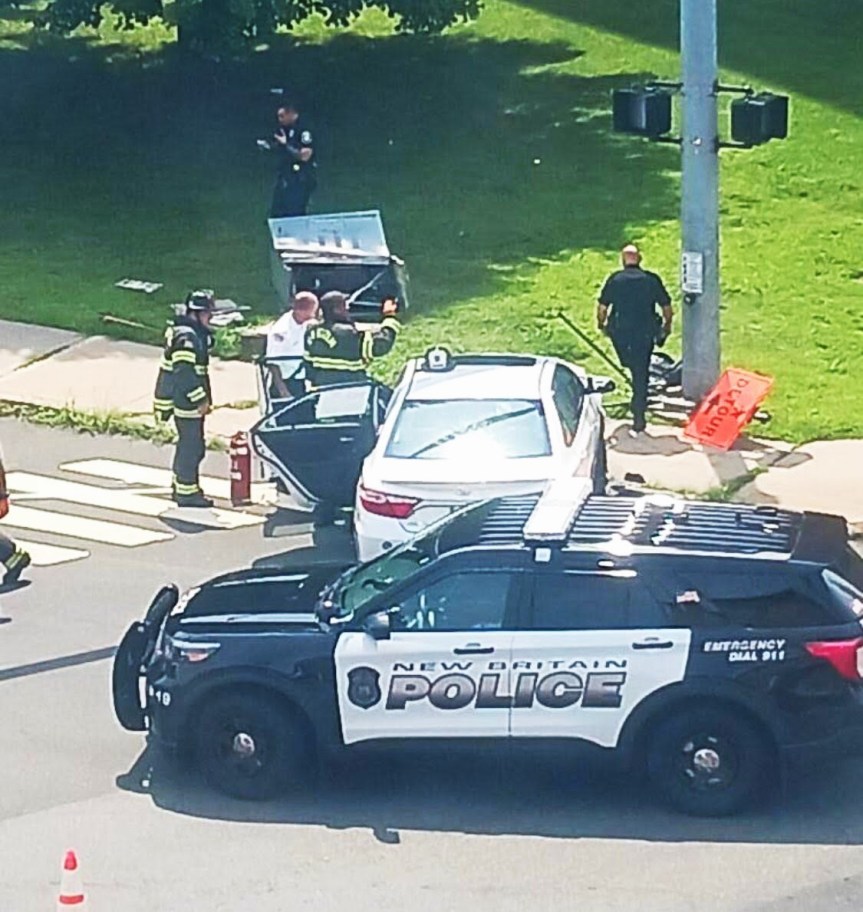
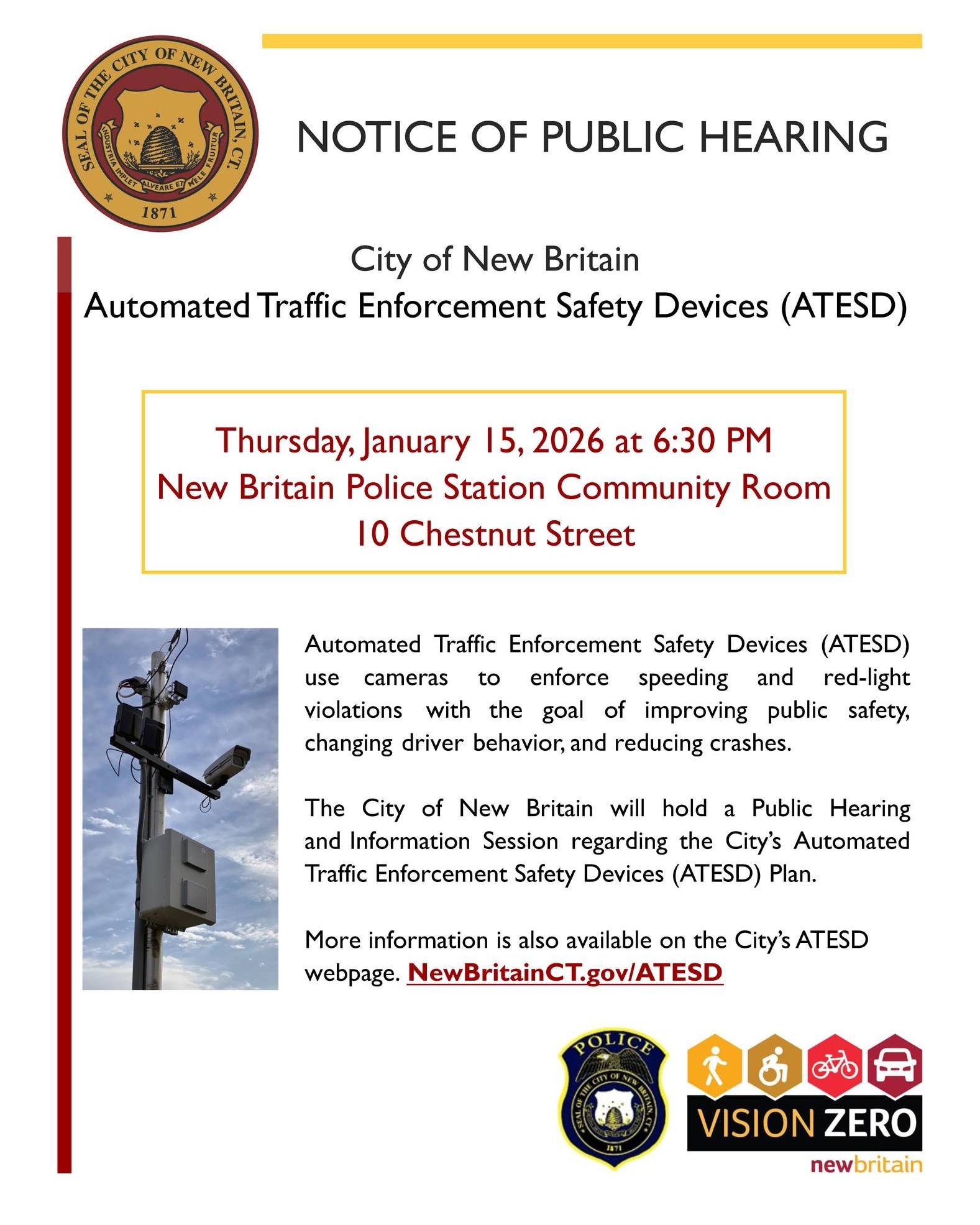
The City of New Britain will take the next step in selecting locations for speed enforcement traffic cameras at a January 15th public hearing of the Vision Zero Task Force.
A Vision Zero public hearing is set for Thursday, Jan. 15th, at 6:30 p.m. at the New Britain Police Department Community Room, 10 Chestnut Street.
In 2025 the task force, comprised of elected and appointed city officials, developed the Traffic Safety Action Plan working with consultants from Cambridge Systematics. Federal grant funds from the Capitol Region Council of Governments (CRCOG) have supported Vision Zero initiatives in central Connecticut towns over the last year.
The Common Council adopted a resolution that established the task force “to develop a comprehensive Safety Action Plan to identify projects and strategies that will reduce fatalities and serious injuries at high crash locations in New Britain.”
The 57-page report provides a range of “countermeasures” to “reduce fatal and serious injury crashes by 50% by 2035 and to reach Vision Zero by 2045.” One of the “key findings” is to “leverage technology to mitigate safety challenges….by employing ATESD location designation, street lighting and signal turning changes.”
Last June the Common Council adopted a new ordinance to allow the use of automated traffic enforcement safety devices (ATESD) under a state law (Public Act 23-116) enabling communities to use the video technology as part of safety action plans.
ATESDs in New Britain will be used to automatically detect and record traffic violations, such as running a red light, speeding, or other infractions. State law allows municipalities to establish a fine to be imposed against the owner of a motor vehicle committing a violation of not more than $50 for a first violation and not more than $75 for a second or subsequent violation. Local officials have stated that initial violations will result in a warning and not a fine with a purpose of changing behaviors more than collecting revenue. “Any funds received by a municipality from fines imposed shall be used for the purposes of improving transportation mobility, investing in transportation infrastructure improvements or paying the costs associated with the use of automated traffic enforcement safety devices in the municipality.”
Altumint, Inc., a Maryland-based company that manufactures and supports ATESD systems, was selected as the vendor for license plate recognition devices. Altumint, a CRCOG approved vendor, has been selected by several CT communities for implementation.
Any contract with Altumint is expected to be “cost neutral” according to the company. In responding to the city’s request for proposals Altumint stated “tax dollars will never be used to pay for this technology. Our invoicing over the life of the contract for your ATESD program will never exceed the Town’s fine revenue collected.”
Concerns have been raised over rights and personal privacy in regard the use of “flock” surveillance cameras that collect more data than specialized license plate readers that are proposed for New Britain. In December the American Civil Liberties Union called for a moratorium on “flock” surveillance in the state, according to a CT News Junkie story.
The ATESDs are limited to a maximum of two in a census tract to avoid targeting. For privacy concerns information collected cannot be used for other purposes, the driver and passengers are not identifiable and all personal information must be deleted in 30 days, according to the state enabling legislation that says “no personally identifiable information shall be disclosed by the municipality or a vendor to any person or entity, including any law enforcement unit, except where the disclosure is made in connection with the charging, collection and enforcement of the fines imposed.” Violations will be under local control with alleged violations reported electronically to the New Britain Police Department.
The starting point for camera implementation will involve 17 “school zones” especially for children walking within a half mile of school. The plan, however, includes lists of priority intersections and high crash locations throughout the city with possible countermeasures. More than 20 locations, for example, are identified in extended downtown area with “the most pedestrian/cycle crashes” call for stepped up enforcement.
Data from the University of Connecticut’s Crash Data Repository has been used to identify trouble spots. The UCONN data shows there were 17 fatalities involving 127 vehicles in New Britain over three years (October 2021-September 2024) and 90 persons with suspected serious injuries involving 141 vehicles in the city over the same period. For all crashes and collisions 5,230 were reported involving 9,607 vehicles between 2021 and 2024.
New Britain’s implementation and enforcement is expected to be similar to Middletown where the the city approved AETSDs in late 2024.
Following public hearings and Common Council approval the city will submit a plan to the CT Department of Transportation (CT-DOT) that will identify the locations of the cameras.
Vision Zero as a public policy originated in Sweden in 1997. Its “core principle” is that “it can never be ethically acceptable that people are killed or seriously injured when moving within the road transport system.” It has spread to other countries including cities and towns in the United States. The federal Safe Streets grants program, part of the Infrastructure and Jobs Act adopted in 2021, is accelerating Vision Zero initiatives in the U.S.
John McNamara is an alderman from Ward 4 and the Common Council Majority Leader.
Related post from December 2024 https://nbpoliticus.com/2024/12/12/vision-zero-task-force-sets-goals-to-reduce-traffic-fatalities/
 NB Politicus