
By John McNamara
News of the end of the line for making Stanley tools in New Britain came early on February 26. By the afternoon Stanley Black & Decker (SBD) officially announced the closing of its Myrtle Street facility where up to 300 workers will lose their jobs later this year.
The dominance of the iconic Stanley brand brought a surge of television and media outlets looking to report a familiar story in a factory town where off shoring and closures have been occurring for more than a generation.
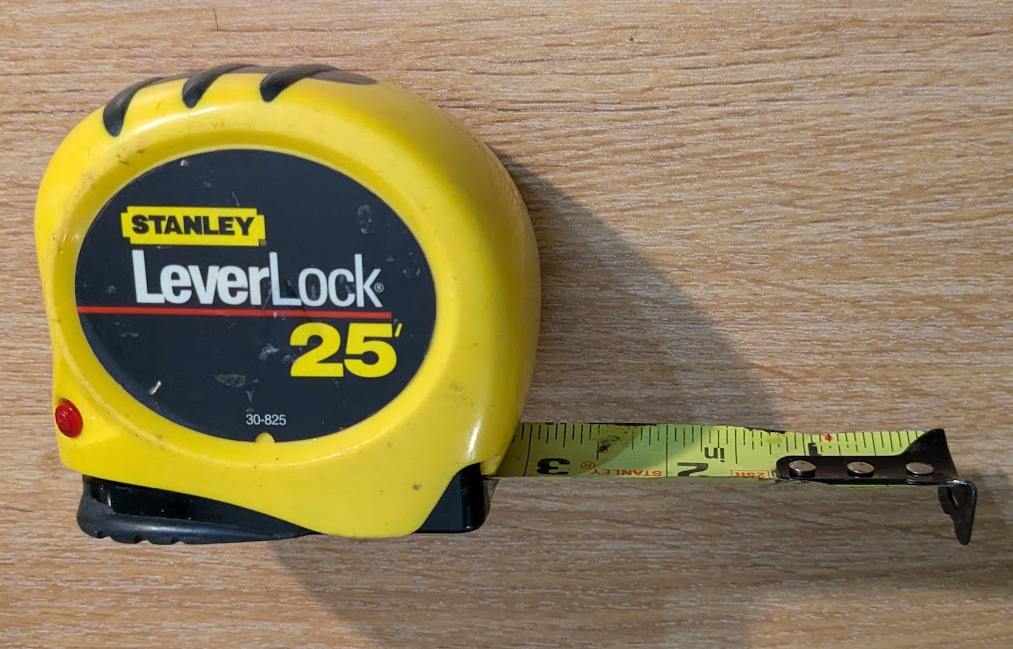
A company spokesperson issued a terse statement to city officials and the press when word got out Thursday: “As a result of a structural decline in demand for single-sided tape measures, we have decided to close our facility in New Britain that predominantly makes these products. These products are quickly becoming obsolete in the markets we serve. We are focused on supporting impacted employees through this transition, including providing options for employment at other facilities, severance, and job placement support services for both salaried and hourly employees.”
As of Saturday, February 28th a notice of the Myrtle Street plant closing had not been reported to the CT Department of Labor (DOL). The Worker Adjustment and Retraining Notification (WARN) Act requires employers with 100 or more full-time workers to give 60-days’ notice of a plant closing to workers and their bargaining units, local officials and the DOL’s rapid response team. Assuming that notice comes in the coming week the closing date will occur by early May.
In the immediate aftermath of SBD’s statement, Mayor Bobby Sanchez responded that “this decision reflects broader national and global economic pressures facing manufacturers across the country, including rising production costs and uncertainty in federal trade policy. It was not driven by actions taken at the local or state level. My focus is not on politics; it is on people. I have spoken with Governor Lamont and have his full commitment to supporting New Britain. We will work closely with state workforce agencies, community partners, and employers to ensure impacted employees have access to job placement services, retraining opportunities, and every available resource to help them transition as smoothly and quickly as possible.”
The announcement of the closing continues the years-long cycle of closing U.S. plants by SBD in the city of its founding and in other locations.
The closings and layoffs that occurred starting in the 1990s, including the shuttering of the hand tool division after 2000, stemmed from moving manufacturing out of the United States for cheap labor. But in its statement this week SBD indicated a phase out of the product line was occurring, not a relocation. While the single-sided tape measures are still widely used in the global market, SBD appears to be leaving that market to other companies that make the products in China or offshore.
A New Britain Progressive internet search (SEE table below) shows that the decline of New Britain’s manufacturing base was not a single event but a series of shifts to low-cost labor markets and, in the case of SBD, a multi-year program to reduce costs and close small-scale operations.
| Year, Sources & Context | Impact & Action |
| 2001-2002 IAM Local 1433, New Britain Herald | 1,200 jobs eliminated at Hardware Division; moved to China, Mexico IAM |
| 2008 Hartford Courant, December 12, 2008 | 2,000 global jobs cut, including at Myrtle Street plant (Recession) |
| 2022 SBD Investor Relations | $2 billion cost-reduction plan launched; loss of 1,000 jobs globally |
| 2024-2025 2024-2025 SBD Annual Reports | Global headcount dropped from 48,500 to 43,500 as SBD closed aging plants |
| February 2026 Hartford Business Journal, Hartford Courant, CT Mirror | Estimated 300 jobs lost at last manufacturing plant in New Britain |
Along with the manufacturing decline has been the diminished presence and influence of industrial unions like the International Association of Machinists (IAM), the United Auto Workers (UAW) and earlier, the United Electrical Workers (UE). IAM Lodge 1433, the local that represented Stanley workers since 1945 in post war New Britain, was not on hand for the elimination of jobs at the Myrtle Street plant this week.
Also lost to the community will be the corporate philanthropy of Stanley Works that has been prominent in Greater Hartford through the years. For generations the company adhered to the community engagement of its founder, Frederick Stanley and a century later CEO Donald Davis who made his home in New Britain: “…Frederick Stanley began establishing a company tradition of community service—one that continues to this day. Stanley involved himself in the creation of a local gas light company in 1855 and, two years later, proved instrumental in helping bring the first running water to New Britain. In 1871, he even served as New Britain’s first mayor.” (from CThistory,org)
For now, the world headquarters for SBD will still be in New Britain tucked away in fortress-like corporate offices employing an estimated 400 persons off Slater Road next to I-84 on the Farmington line.
The name Stanley, however, will be forever linked to the “hardware city” because 183 years ago Frederick Stanley opened a shop that would eventually grow into a global manufacturer of hand tools. The Stanley legacy remains in the city’s parks, the Stanley endowment for the preservation of those parks and in a local history to be preserved of 20th century industrial growth and the rise of the labor movement.
John McNamara is Ward 4 Alderman and the Common Council Majority Leader.
NB Politicus posts also appear in theNew Britain Progressive
Subscribe to receive email editions https://newbritainprogressive.com/sign-up-for-the-e-mail-edition/
 NB Politicus