
State Aid Needed To Implement Allen Street Capital Improvements In New Britain
By John McNamara
The damage to homes and properties caused by intense rains has accelerated over the last two years in New Britain and other communities across Connecticut.
Public stormwater and sewer systems built a century ago are routinely overwhelmed whenever a hard rain falls on neighborhoods like mine. Almost without exception, local and state officials say climate change is increasing the threat.
Compromised pipes and backed-up catch basins do not keep up as storm water mixes with sewage, turning streets into rivers and making dozens of homes vulnerable to flooding.
Out-of-pocket expenses continue for homeowners in the path of municipal sewer backups. Local government is also paying out more in claims to pay for damages to citizens who file for compensation.
The problem came into focus in Hartford in 2024. State government intervened in the city’s North End relying on budget appropriations and federal money in a one-off $9 million Hartford Flood Relief and Compensation Program (HFRCP). State Comptroller Sean Scanlon, who stepped in to oversee the expanded program, reports 523 property owners, renters, and business owners received $8,191,494.97 in relief receiving an average of $15,722 by the time the program ended in December. HFRCP grew from a limited $500,000 program the city started in 2021 for city residents impacted by flooding during major storms including Tropical Storm Fred, Storm Henri and Storm Ida. The program provided up to $7.500 for repairs and to prevent further damage.
While relief measures like Hartford’s have helped owners recover from damages, the cause of the trouble remains. Flooding from broken city pipes will recur without new public investments from all levels of government to make infrastructure upgrades to reduce the threat of more damage. Local funding and current federal grants from the Environmental Protection Agency or the Federal Emergency Management Agency do not come close to meeting these urgent infrastructure needs.
Since the summer of 2023 the dramatic jump in flooding has led to a public outcry in New Britain, especially from residents in the Overlook Avenue-McKinley Drive and Allen Street neighborhoods. Only in the last year, thanks to public pressure, has the city administration acted and progress has finally been made on capital funding for Allen and Overlook where extensive damage occurs.
The city allocated $2 million from remaining American Rescue Plan Act (ARPA) funds to stem persistent backups into homes in the Overlook-McKinley neighborhood and implementation is underway.
On Allen Street near Central Connecticut State University (CCSU), a $13.9 million project that would have cost an estimated $6.7 million 10 years ago awaits full funding with a current plan to obtain $9 million through a state bond application supported by New Britain’s five-member legislative delegation. It includes cost sharing by the city ($4 million) to meet project costs.
Across New Britain the FLUSH program, standing for Fresh Line Upgrades for Sanitary Health, is “a massive investment in repairing and replacing the city’s storm water and sanitary sewer lines” according to the city’s last annual comprehensive financial report. FLUSH is reported in just Phase three of 11 proposed phases and when complete is expected to cost more than $100 million. The challenge is that financing these projects is piecemeal and year to year.
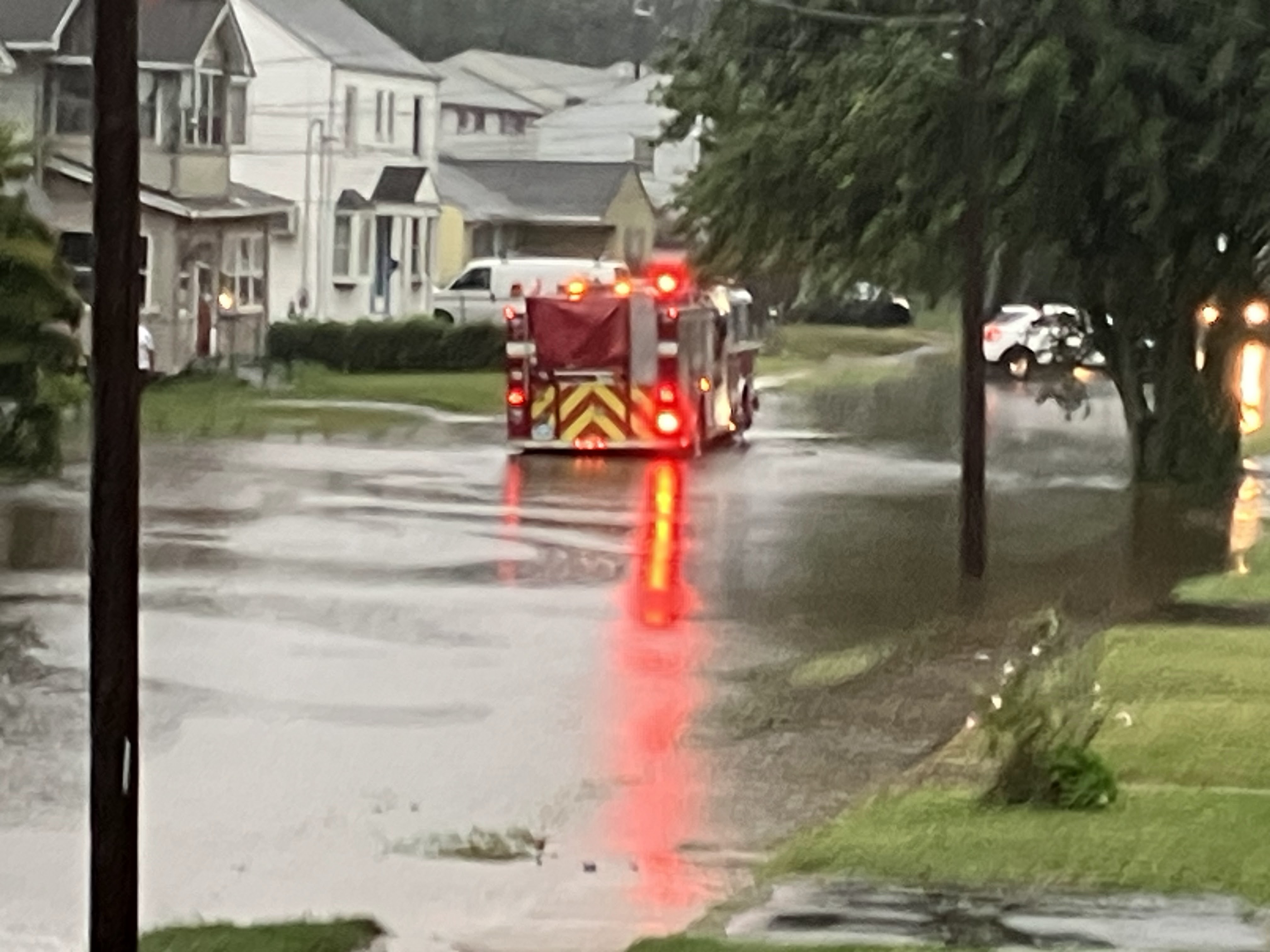
There can be no more urgent priority for the Lamont Administration and legislative leaders in 2025 than to help communities with grants-in-aid for stormwater infrastructure improvements in high risk areas. In addition, a major boost to the state’s Clean Water Fund with earmarks for sewer and storm water upgrades would also help communities address their most urgent needs.
The enormity of the problem in New Britain and elsewhere more than justifies new bonded grants-in-aid for sewer projects. In 2025 “bringing home the bacon” should mean more support for storm water and sewer infrastructure improvements.
John McNamara is an alderman from New Britain’s Ward 4 and the Common Council Majority Leader.
 NB Politicus
Great report, John. Exhaustive, a lot of work. Thanks! I’m guessing that this is a national problem. State and local money won’t be enough.
And, as you hinted, Climate Change is at the root. We don’t want to be part of a shallow effort that only addresses symptoms. I’m not sure that “there can be no more urgent priority:” war, the healthcare crisis…
This is a transformative period when we who have labored mostly at the local level, stretch out and wrap our minds around the priorities that have not been solved because of our fractured form of government: the higher levels, often isolated from community people like us, have failed. We can build a cross government alliance that can get to the roots of these pressing problems.
Thanks. “No more urgent priority” is ti urge leaders to put more of these projects on the agenda. Like the Stewart administration projects have been ignored for bonding in favor of the projects that draw more attention. A federal WPA initiative is in order as well as attention to green infrastructure. More to come.
Thank you for this much needed piece, John! You are so convincing when suggesting that it would be much more cost effective for State and local governments to be proactive and repair the infrastructure all at once rather than wait and make repairs piece meal and in response to the latest water event. As you and Bill S point up, the effects of Climate Change will only make these problems worse in the long term.