Governor Lamont Calls For 30-Day Pause In Use of License Plate Readers Over Data Collection Concerns
By John McNamara
New Britain became the 18th community approved for use of traffic enforcement cameras on August 7th on the same day Governor Lamont called for a 30-day pause on their use primarily because of opposition to “flock” cameras in other towns.
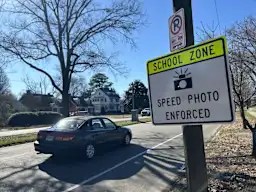
The Office of State Traffic Administration (OSTA) at the Department of Transportation OK’d the New Britain plan approved by the Common Council last January. City officials plan a gradual rollout of the Automated Traffic Enforcement Safety Devices (ATESDs) by placing two cameras in school zones for speed enforcement at the start of the school year.
The New Britain plan lists 18 possible locations based on crash and accident data. The initiative springs from the work of a Vision Zero task force that issued a report in June, 2025 calling for dozens of traffic calming measures and road improvements, including the cameras to address speeding and red-light violations.
Governor Lamont, in a letter to the CT Police Officers Standards and Training Council (POST-C), asked the Council to review all current laws regulating Automated License Plate Readers (ALPR) and “recommend the policies to be created and adopted by a local or state agency” before the technologies are used and “discusses the relevant Trust Act, Shield Law, and data confidentiality provisions in state law.” Lamont wants the police council to “promulgate guidance” for law enforcement agencies.
Under 2023 enabling legislation New Britain and other towns have implemented ATESD plans with the requirement that “no personally identifiable information shall be disclosed by the municipality or a vendor to any person or entity, including any law enforcement unit, except where the disclosure is made in connection with the charging, collection and enforcement of the fines imposed.” Installation is limited to a maximum of two in a census tract to avoid targeting. Information collected cannot be used for other purposes, the driver and passengers are not identifiable and all personal information must be deleted in 30 days.
Lamont’s pause stems from growing concern over “Flock” cameras in some communities and the passage of a new law (Public Act 26-14), calling for “accountability and the use and retention of data derived from automated license plate reader systems” to take effect later this year. The 2026 law is intended to strengthen restrictions on any sharing of information by local police departments and allows for civil penalties to protect constitutional rights in response to widespread, unlawful actions by federal Immigration and Customs Enforcement (ICE) against immigrants and citizens.
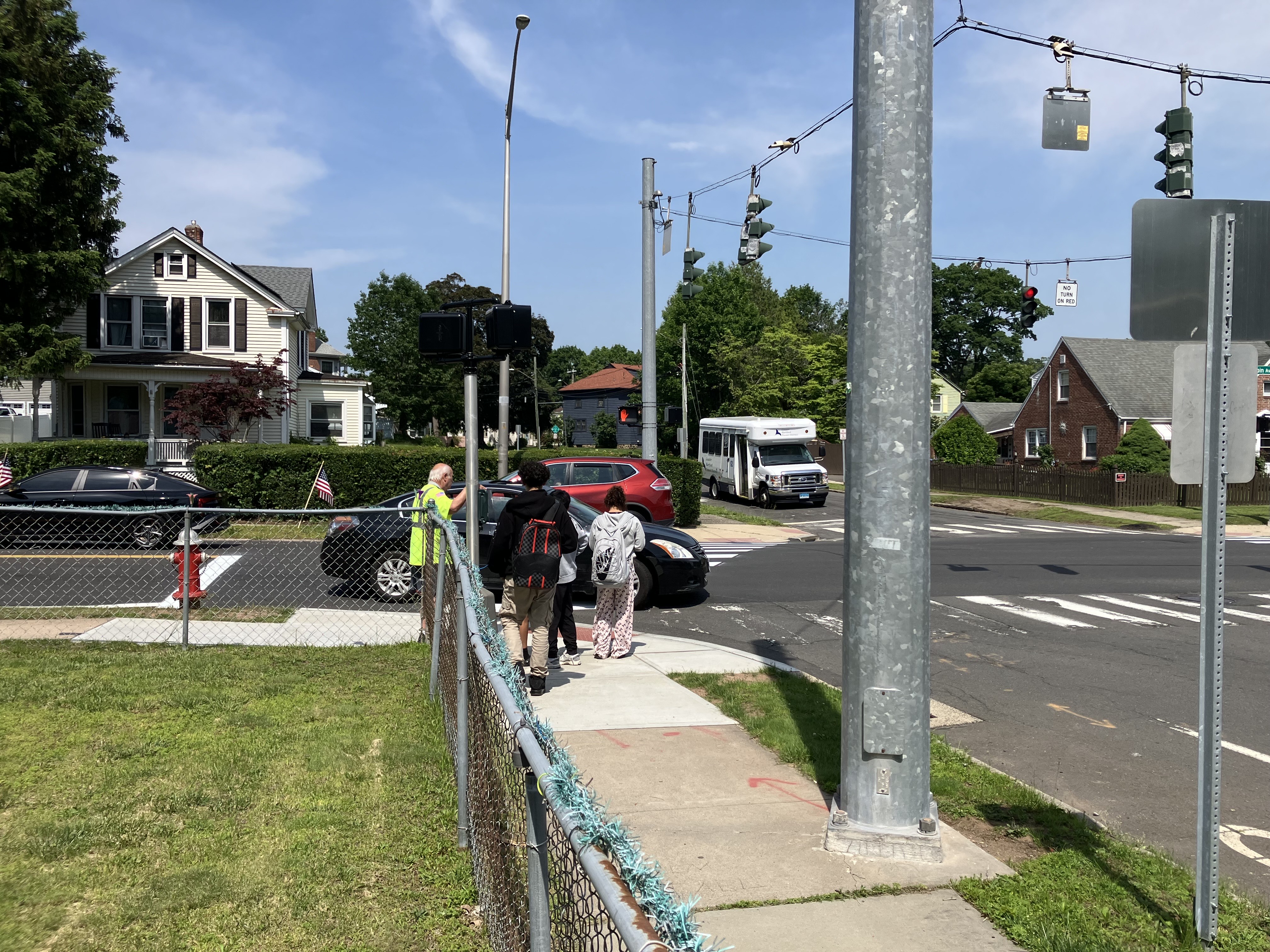
The ATESDs selected in New Britain are not the same as more intrusive “Flock” cameras and are only activated when a traffic violation occurs to record license plates. Flock systems collect more data continuously and are used by police to investigate crimes, stolen cars, and missing persons. Because of the differences between ATESDs and Flock systems, the 30-Day pause from Governor Lamont is not expected to cause any significant delay in New Britain activating its first cameras in school zones.
New Britain Traffic Enforcement Cameras FAQs (from City of New Britain)
- All violations are reviewed by a City of New Britain employee and/or police officer before being issued
- There will be a 30-day warning period
- No images of the driver will be captured
- Vehicle owners will receive a citation via mail
- The fine for a first violation is $50 and subsequent violations $75
- A $15 processing fee for each citation will be collected
- All revenue must go towards roadway safety improvements in New Britain
- Citations do not go towards points on your license
- All personally identifiable information will be deleted after the violation is adjudicated
The ATESDs will be used to automatically to detect and record traffic violations, such as running a red light, speeding, or other infractions. First-time violations will be waived with a warning. State law allows municipalities to establish a fine to be imposed against the owner of a motor vehicle committing a violation of not more than $50 for a first violation and not more than $75 for a second or subsequent violation when drivers go over the speed limit by more than 10 miles an hour.
Altumint, Inc., a Maryland-based company that manufactures and supports ATESD systems, was selected as the vendor for license plate recognition devices. The contract with Altumint prohibits any sharing of data with other state or federal agencies
ATESDs will not involve expending tax money and will be “revenue neutral”, according to city officials. Any revenues from fines will be dedicated to traffic safety and transportation infrastructure in the city.
John McNamara is a Ward 4 Alderman and the Common Council Majority Leader
Related story: https://newbritainprogressive.com/2026/01/12/task-force-hearing-on-traffic-cameras-to-be-held-thursday-jan-15th/
 NB Politicus